



Can a cheaper DeFi transaction actually be the more dangerous transaction? Sometimes, yes. Gas optimization is often presented as a simple exercise in lowering a fee, but the fee is only one part of a transaction’s cost. A rushed approval, an opaque contract call, or an artificially low priority fee can create losses far larger than the amount saved. For users in the United States managing assets across Ethereum and other EVM networks, the more useful question is not “How do I spend the least gas?” but “What level of cost, speed, and execution risk is reasonable for this action?”
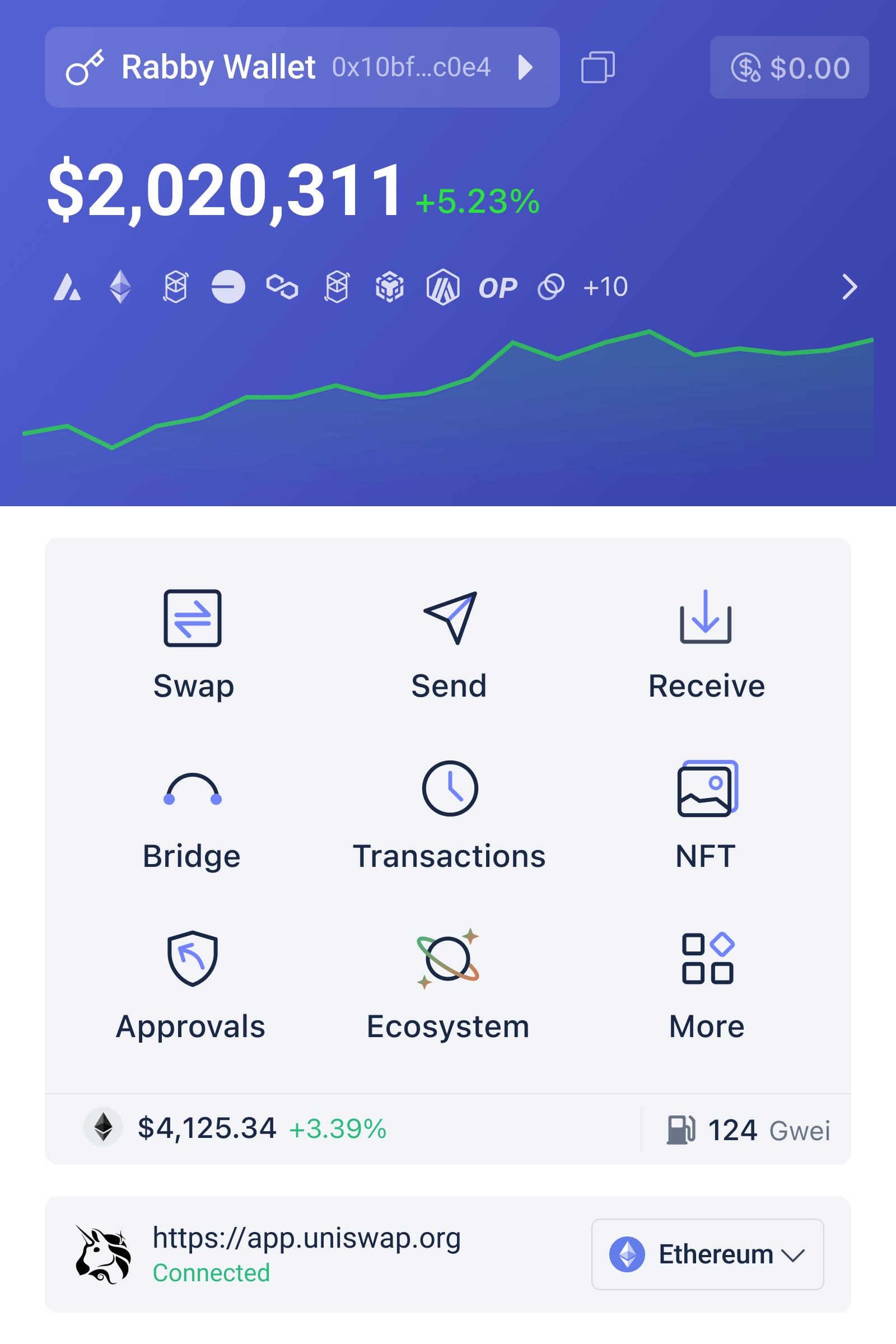
That distinction matters when choosing a cryptocurrency wallet. A wallet is not merely a place to store a private key; it is the interface through which a user interprets a proposed state change on a blockchain. Rabby Wallet is positioned for Ethereum and EVM networks, and a project update dated August 24, 2026, describes its aim as a simple, fast, and secure on-chain wallet across those chains. That positioning is relevant, but it should not be mistaken for a guarantee. Security still depends on what a user signs, which network is selected, how contracts behave, and whether the wallet’s warnings are understood.
The First Myth: The Lowest Gas Fee Is Always the Best Choice
On a typical EVM network, a transaction fee is broadly determined by the amount of computational work required and the price paid for that work. The computational component is commonly expressed as gas used, while the market component reflects demand for block space. A simple transfer generally consumes less gas than a token approval, a decentralized exchange swap, a liquidity action, or a multi-step contract interaction. Reducing the fee therefore requires understanding which variable can actually be changed.
Users can sometimes reduce gas by choosing a less congested network, batching operations where the application supports it, avoiding unnecessary approvals, or waiting for conditions in which demand is lower. But delaying a transaction is not free in every setting. A swap may become less attractive as the market moves; a liquidation-sensitive position may become riskier while waiting; and a failed transaction can still consume some gas because the network must execute and record the attempted call. “Cheap” and “successful” are different outcomes.
Priority fees create another trade-off. A lower fee may leave a transaction pending longer, while a higher fee may improve the chance of timely inclusion. Neither setting changes whether a malicious contract is malicious. It changes the economics and timing of execution. For a routine transfer, patience may be sensible. For a transaction whose value depends on a narrow price range or a changing protocol state, excessive fee reduction can increase execution risk.
A practical mental model is to treat gas as an insurance decision rather than a shopping discount. The question is how much it is rational to pay for timely, predictable inclusion given the value and urgency of the action. This does not mean paying more automatically improves safety. It means the fee should be evaluated together with slippage, deadline, transaction complexity, and the possibility that the state of the protocol will change before inclusion.
Why Gas and DeFi Security Are Connected
Gas optimization becomes a security issue because signing a transaction authorizes a particular contract call, not merely a payment. A user may believe they are swapping one asset for another, while the actual request also includes an approval, a permit, a transfer, or a call to an unfamiliar contract. The fee may be visible and understandable while the permission being granted is not. That is one reason a low-cost transaction can still be a poor transaction.
Token approvals illustrate the problem. An approval can allow a contract or spender to move a specified amount of a token on the user’s behalf. An unlimited approval may reduce the need for repeated approval transactions, but it can enlarge the consequences if the approved contract is compromised, incorrectly designed, or not the contract the user intended to use. A limited approval may require additional gas later, yet it narrows exposure. The correct choice depends on the user’s threat model and the trust placed in the application.
This is where a wallet interface can provide practical value. During installation and use, a user should look for transaction previews, network identification, recipient details, token changes, approval amounts, and warnings about suspicious or unusual contract behavior. Such signals are best understood as decision support. They can make a complex request easier to inspect, but they cannot prove that an economic strategy is sound or that a contract will remain safe after it has been reviewed.
Before installing a browser wallet, users should verify that they are obtaining the software from an authentic source and that the browser extension has the expected publisher identity. A useful starting point for readers researching how to download and install the rabby wallet extension is to treat installation as part of the security boundary, not as an administrative step. A fake extension can defeat every later precaution by capturing seed phrases or redirecting transactions.
What Transaction Review Can—and Cannot—Tell You
Transaction simulation is often discussed as if it were a crystal ball. In reality, a simulation is an estimate of what may happen if a call is executed against a particular view of blockchain state. It can help identify expected token movements, reverts, insufficient balances, and some suspicious behaviors. That is materially better than signing blindly.
Yet simulation has boundaries. Blockchain state can change between simulation and inclusion. A liquidity pool can move, an oracle value can update, a contract can behave differently under changed conditions, or a transaction can be reordered relative to other transactions. A simulation also does not answer every economic question. It may show that an asset will be received, but not whether the received asset is liquid, fairly priced, or exposed to a fragile protocol design.
The same caution applies to security warnings. A warning is evidence that deserves attention, not a substitute for judgment. Conversely, the absence of a warning is not proof that a transaction is safe. Detection systems operate with incomplete information and can miss novel contracts, produce false positives, or fail to evaluate risks that are economic rather than technical. The strongest workflow combines automated screening with human verification of the application, domain, contract address, network, and intended outcome.
One non-obvious point is that many security failures occur before the transaction reaches the gas market. A user may be on a phishing website, connected to the wrong chain, or responding to a deceptive signature request. In those cases, optimizing the fee is solving the wrong problem. The most valuable optimization may be reducing unnecessary signing, not reducing the price of each signature.
A Reusable Framework for Gas-Efficient, Safer Actions
DeFi users can evaluate a proposed action through four questions. First, what state change is intended? State change means the alteration recorded on-chain: a token transfer, an approval, a swap, a deposit, a withdrawal, or a position adjustment. If the user cannot describe the intended result in plain language, the transaction deserves a pause.
Second, what permissions are being granted? Separate a one-time action from continuing authority. A transfer and an approval are not equivalent, even if they appear in the same application flow. Review whether the spender is the contract expected by the application and whether the allowance is proportionate to the task.
Third, what is the cost of delay? If timing is not important, waiting for less congested conditions may be reasonable. If timing affects price, liquidation exposure, or the validity of an opportunity, a very low fee can be false economy. This is a risk-adjusted decision, not a race to the smallest displayed number.
Fourth, what happens if the transaction fails or executes differently than expected? Consider slippage, transaction deadlines, failed-call gas, partial protocol effects, and the ability to revoke or reduce permissions afterward. This final question is frequently neglected because interfaces emphasize successful completion rather than the cost of an unfavorable outcome.
For US users, network selection deserves particular attention because many applications present several EVM-compatible chains with different fee markets and liquidity conditions. A lower-fee network may be attractive, but assets and contracts are not automatically interchangeable across chains. Bridging introduces additional smart-contract and counterparty considerations, while a token representation on one network may have different liquidity and risk from the asset on another. Lower gas does not erase bridge risk or market fragmentation.
Common Misconceptions Worth Retiring
“A wallet that flags risk has made the transaction safe.”
No. A wallet can improve visibility and help users notice inconsistencies, but the user still decides whether to sign. Wallet warnings are strongest when they expose a mismatch between the intended action and the requested action. They are weaker against risks that arise from protocol governance, economic design, oracle dependence, or future contract changes.
“Using a reputable wallet eliminates phishing risk.”
No. A reputable wallet can protect key material and present transaction information, but a user can still enter a seed phrase into a fraudulent website, approve a malicious spender, or sign a deceptive message. The browser, operating system, extension source, and application domain all form part of the security environment.
“Every failed transaction means the wallet or network malfunctioned.”
Not necessarily. A transaction can fail because a contract condition was not met, a quote changed, a deadline expired, or a protocol rejected the call. Gas may still be consumed because computation took place before the revert. Repeatedly resubmitting without understanding the failure can increase cost and may worsen the underlying position.
“More gas always means more security.”
Gas affects inclusion incentives and timing, not the trustworthiness of a contract. Paying a higher fee can help a valid transaction enter a block promptly, but it cannot repair a bad recipient address, an excessive approval, or an unsafe protocol. Security begins with the action being authorized.
What to Watch as Wallets Develop
If wallets continue to compete on simplicity, speed, and broad EVM coverage, the important measure should be whether they help users form accurate expectations before signing. Useful progress would include clearer separation between transfers and permissions, better explanations of why a warning appears, more intelligible cross-chain context, and stronger distinction between technical validity and economic safety.
The open question is how much complexity can be hidden without hiding risk. A streamlined interface may reduce cognitive load, but excessive abstraction can make users approve actions they do not understand. The likely best outcome is not a wallet that removes every decision. It is a wallet that presents the consequential decisions clearly while automating routine checks where the evidence is strong.
For now, the decision rule is straightforward: optimize gas only after identifying the transaction, the permission, the network, and the consequence of delay. Use wallet previews and warnings as evidence, verify the application independently, and treat installation security as seriously as transaction security. A lower fee is useful when it preserves the same intended outcome. It is not useful when it encourages rushed signing or conceals a larger risk.
Frequently Asked Questions
Does Rabby Wallet guarantee that a DeFi transaction is safe?
No wallet can guarantee that outcome. Rabby Wallet may help users inspect transactions and identify potential issues, but safety also depends on the application, contract code, network, permissions, market conditions, and the user’s own verification. A warning-free transaction can still carry economic or operational risk.
What is the safest way to reduce gas costs?
Begin by avoiding unnecessary transactions and reviewing whether an approval is required. When timing allows, compare network conditions and wait rather than repeatedly submitting failed calls. Do not reduce fees blindly when a transaction is time-sensitive, and never sacrifice verification of the recipient, contract, network, or approval amount merely to save a small amount of gas.
Should DeFi users use unlimited token approvals?
Unlimited approvals can reduce future approval transactions, but they create a larger permission scope. A limited approval may cost more over time while reducing potential exposure. The appropriate choice depends on the contract’s trustworthiness, the value involved, the user’s willingness to monitor allowances, and whether permissions can be revoked later.